


- Home
- Staying Connected
- GFF K&L Shares
- Service Delivery Post
October 27, 2025
|
12:28 PM
Scaling Up the Safer Births Bundle of Care Approach
 by Global Financing Facility Knowledge & Learning Platform
 0.00
0.00
The 2025 Annual Stakeholder Meeting of the Safer Births Bundle of Care (SBBC) program, held at Haydom Lutheran Hospital in Tanzania, brought together a diverse coalition of government officials, health professionals, researchers, and international partners from across Africa and beyond. The gathering marked a pivotal moment for maternal and newborn health, as participants reviewed the transformative impact of SBBC and charted the course for its future.
The SBBC intervention involves the implementation of facility-based, interdisciplinary team-based simulation training, innovative clinical and simulation tools (including Moyo, NeoBeat and Neonatalie live), and data-driven quality improvement. Rigorous evaluation published in the New England Journal of Medicine and shared during the engagement showed the striking impact of Phase 1 of SBBC in Tanzania: over three years, the program—spanning 30 hospitals and 300,000 births across five regions—achieved a 75% reduction in maternal deaths, a 40% reduction in early newborn deaths, and an 18% decline in perinatal mortality, saving more than 1,000 lives (Learn more under Throwback to Last Webinar section, below).
Preliminary results from Phase 2, a scale up of SBBC to 142 hospitals in the same five regions over 2024-5, were also presented during the Stakeholder Meeting, with more heterogenous findings. As SBBC is scaling to more lower-level facilities with fewer births, and consequently fewer deaths, other indicators of improvement in quality intrapartum care are required. In 2026 SBBC’s expansion will extend beyond the original five regions to eleven high burden regions. The Ministry of Health and the President’s Office Regional Administration and Local Government have incorporated SBBC within an expanded set of quality improvement initiatives covering antenatal care and level 2 newborn care such as that provided by NEST360 . This expanded package, called SBBC Plus is being implemented with both domestic and partner resources, including through additional financing from the Global Financing Facility in the World Bank Maternal and Child Health Investment Program, and the newly launched Beginnings Fund. Local authorities in Tanzania are now embedding SBBC Plus into annual health plans, supported by Tanzania’s commitment to primary health care, emergency referral systems, health workforce retention, and a domestic revolving fund for essential commodities.
Discussions also surfaced the importance of system settings and contextual differences—such as health workforce distribution, infrastructure gaps, and financing mechanisms—that could affect SBBC’s effective implementation.
Interest from other governments was palpable. Delegations from Kenya, Zambia, Zimbabwe, and Nigeria participated in SBBC facility visits and the meeting, observing firsthand the SBBC model’s effectiveness. Zambia and Zimbabwe, for example, are developing roadmaps to adapt SBBC, prioritizing simulation-based training, digital quality improvement, and community-linked referral models. The Global Financing Facility has developed a tool for undertaking a rapid estimate to cost the scale up of SBBC within government systems.
The SBBC Stakeholder Meeting underscored the program’s scalability, cost-effectiveness, and potential for regional adoption, offering a blueprint for countries seeking to strengthen maternal and newborn health systems in diverse contexts.
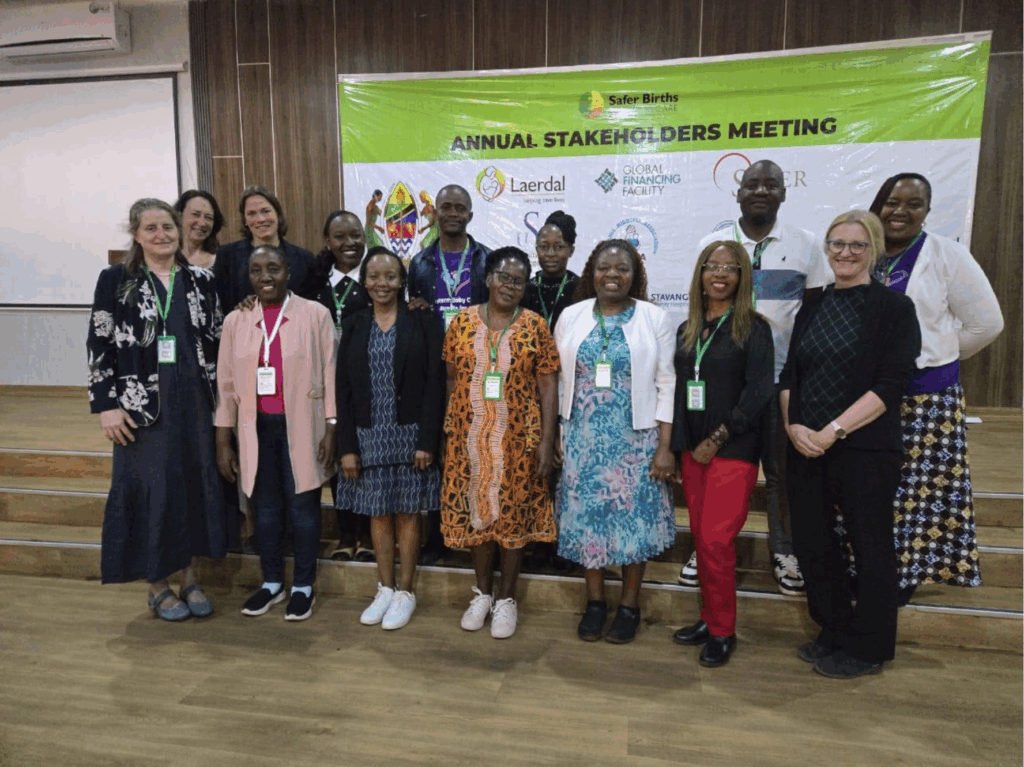
Some of the participants at the Stakeholders Meeting, including country representatives from Zambia, Zimbabwe, Kenya & Tanzania